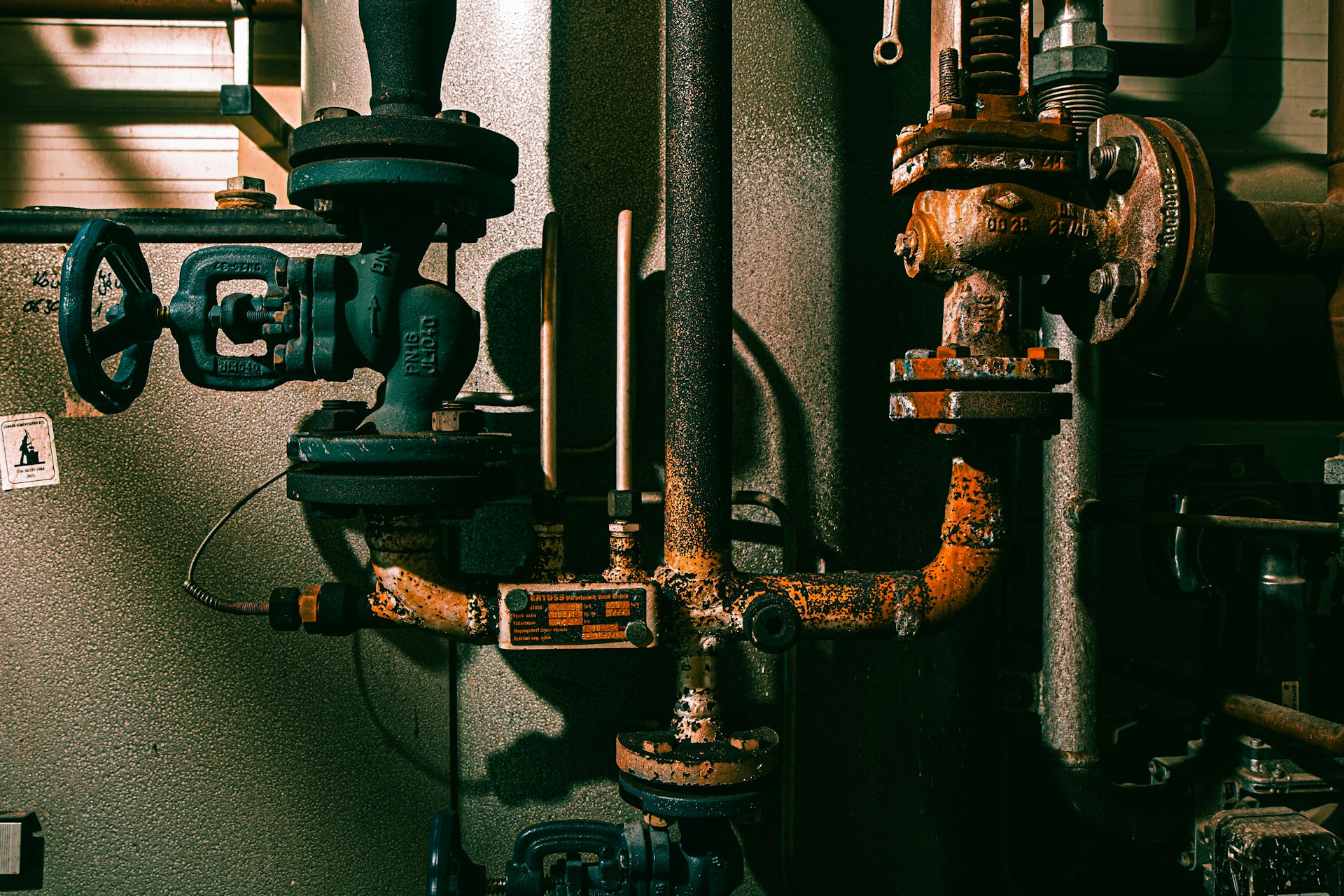
Every foot of uninsulated steam pipe in your facility is silently hemorrhaging money. At 300°F operating temperature, a single inch of bare steel pipe loses enough heat to cost you $15-20 per linear foot annually. Multiply that across hundreds or thousands of feet of piping, and you’re looking at budget losses that can exceed $3,000 per year—often much more.
The good news? Pipe insulation is one of the most straightforward energy efficiency investments available, frequently delivering payback periods under 12 months.
The Physics of Heat Loss in Steam Pipes
Understanding why uninsulated pipes waste so much energy starts with basic thermodynamics. Heat naturally flows from hot surfaces to cooler surroundings through three mechanisms: conduction, convection, and radiation.
For a bare steam pipe, the primary heat transfer occurs through convection to the surrounding air and radiation to nearby surfaces. The rate of heat loss depends on several factors:
- Temperature differential: The greater the difference between pipe surface temperature and ambient air, the faster heat escapes
- Pipe diameter: Larger pipes have more surface area, losing more total heat
- Air movement: Forced air circulation accelerates convective losses
- Pipe emissivity: Oxidized steel pipes radiate heat more efficiently than polished surfaces
At typical industrial steam temperatures of 250-400°F, these losses become substantial. The heat escaping from your pipes represents steam that your boiler worked hard to produce—fuel that went up in smoke without delivering useful work.
BTU Losses Per Foot: The Numbers That Matter
Let’s quantify the problem. Heat loss from bare pipes is measured in BTU per linear foot per hour (BTU/ft/hr). Here are typical values for bare steel pipes at 300°F in 70°F ambient air:
| Pipe Size | Heat Loss (BTU/ft/hr) | Annual Loss (therms/ft) |
|---|---|---|
| 1” NPS | 120 | 10.5 |
| 2” NPS | 210 | 18.4 |
| 4” NPS | 375 | 32.8 |
| 6” NPS | 530 | 46.4 |
| 8” NPS | 680 | 59.5 |
At current natural gas prices averaging $1.00-1.50 per therm, that 4-inch bare pipe costs approximately $33-49 per foot annually in wasted fuel. A 100-foot run of uninsulated 4-inch pipe translates to $3,300-4,900 in annual losses.
These figures assume continuous operation. For facilities running 24/7, the math is straightforward. For intermittent operations, adjust proportionally—but even facilities operating 12 hours daily face half these costs.
Calculate Your Heat Loss
See exactly how much money your uninsulated pipes are costing you.
Calculate Heat Loss & SavingsThe ROI Case for Pipe Insulation
Adding proper insulation reduces heat loss by 85-95%. That 4-inch pipe losing 375 BTU/ft/hr bare will lose only 20-55 BTU/ft/hr when properly insulated—a reduction that translates directly to fuel savings.
Installation Costs
Pipe insulation costs vary by material, thickness, and labor rates, but typical installed costs range from $8-25 per linear foot for industrial applications. Fiberglass with aluminum jacketing on that 4-inch pipe might run $12-18 per foot installed.
Payback Calculation
Using conservative figures for our 100-foot, 4-inch pipe example:
- Annual heat loss savings: $3,500 (85% reduction)
- Installation cost: $1,500 ($15/foot)
- Simple payback: 5.1 months
Even in less favorable scenarios with higher installation costs or lower energy prices, payback periods rarely exceed 18-24 months. This makes pipe insulation one of the most reliable energy efficiency investments available.
Additional Benefits Beyond Energy Savings
The financial case extends beyond direct fuel savings:
- Reduced boiler load: Lower steam demand means less boiler maintenance and extended equipment life
- Improved process control: Insulated systems maintain more consistent temperatures
- Personnel safety: Hot surfaces cause burns; insulation protects workers
- Condensation prevention: Cold pipe insulation prevents moisture problems and corrosion
- Noise reduction: Insulation dampens pipe vibration and flow noise
Insulation Material Options
Not all insulation performs equally. Material selection depends on operating temperature, environment, and budget.
Fiberglass
The workhorse of industrial pipe insulation, fiberglass offers excellent thermal performance at reasonable cost. Temperature rating to 850°F makes it suitable for most steam applications. Requires protective jacketing to prevent moisture absorption and physical damage.
Best for: General steam applications, budget-conscious projects
Mineral Wool (Rock Wool)
Similar to fiberglass but with higher temperature tolerance (up to 1,200°F) and better fire resistance. Slightly higher cost but excellent performance in high-temperature applications.
Best for: High-temperature steam, fire-rated assemblies
Calcium Silicate
A rigid insulation ideal for high-temperature applications where compressive strength matters. Temperature rating exceeds 1,200°F. More expensive than fibrous insulations but extremely durable.
Best for: High-temperature lines, areas requiring mechanical protection
Aerogel
The premium option, aerogel insulations provide exceptional thermal performance in thin profiles. Particularly valuable where space constraints limit traditional insulation thickness. Higher material cost but sometimes essential for tight spaces.
Best for: Space-constrained installations, retrofit projects
Closed-Cell Foam
For lower-temperature applications and cold pipes, closed-cell elastomeric foam provides excellent moisture resistance. Not suitable for high-temperature steam but ideal for condensate return lines and chilled water.
Best for: Condensate lines, sub-ambient temperature applications
Common Insulation Mistakes to Avoid
Even facilities that invest in pipe insulation often leave money on the table through incomplete or improper installation.
Ignoring Fittings and Valves
Valves, flanges, and fittings are often left bare because they’re harder to insulate. Yet these components have high surface areas and can represent 10-20% of total heat loss. Removable insulation blankets solve this problem, allowing maintenance access while providing thermal protection.
Insufficient Thickness
Economically optimal insulation thickness depends on energy costs, operating temperature, and pipe size. Skimping on thickness saves pennies upfront while costing dollars in perpetual heat loss. ASHRAE standards and DOE guidelines provide thickness recommendations by application.
Damaged or Missing Jacketing
Weather exposure, foot traffic, and mechanical damage compromise insulation over time. Regular inspections should identify damaged sections for repair. Aluminum or stainless steel jacketing protects insulation in industrial environments.
Neglecting Maintenance
Insulation can become waterlogged, compressed, or displaced over time. Annual thermal surveys using infrared cameras quickly identify problem areas before they become expensive energy leaks.
Building Your Business Case
When presenting pipe insulation projects to management, frame the investment properly:
- Quantify current losses: Walk down uninsulated runs and calculate annual costs
- Document safety risks: Burn incidents carry liability and workers’ compensation costs
- Include utility rebates: Many utilities offer incentives for industrial efficiency projects
- Consider carbon reduction: ESG reporting increasingly values emissions reductions
- Present payback clearly: Sub-12-month paybacks are hard to argue against
Taking Action
Every day your steam pipes run uninsulated, money escapes into the air. Unlike complex efficiency projects requiring process changes or capital equipment, pipe insulation is straightforward—identify bare pipes, install appropriate insulation, and start saving immediately.
Start with a thermal survey of your facility. Identify the highest-temperature, largest-diameter runs that operate the most hours. These represent your biggest opportunities. Calculate the losses, get installation quotes, and make the investment.
With typical payback periods under one year, the question isn’t whether you can afford to insulate your steam pipes. It’s whether you can afford not to.