Electric vehicles have moved from novelty to mainstream, but one question still dominates conversations: How much does it really cost to charge an EV compared to filling up with gas?
The answer depends on several factors—where you charge, when you charge, and what you drive. This guide breaks down the real costs with concrete numbers so you can make an informed decision.
Home Charging: The Most Affordable Option
About 80% of EV charging happens at home, and for good reason. Home charging is significantly cheaper than any other option.
Level 1 Charging (Standard 120V Outlet)
Every EV comes with a Level 1 charger that plugs into a standard household outlet. Here’s what you need to know:
- Speed: 3-5 miles of range per hour
- Cost: Uses your existing outlets—no installation required
- Best for: Plug-in hybrids, short commutes, or overnight charging
At the national average electricity rate of $0.12/kWh, charging a typical 60 kWh battery from empty costs approximately $7.20. That’s roughly 200-240 miles of range.
Level 2 Charging (240V Home Charger)
Level 2 chargers require a 240V outlet (like your dryer uses) and deliver much faster charging:
- Speed: 25-30 miles of range per hour
- Installation cost: $500-$2,000 including electrician fees
- Best for: Daily drivers, larger batteries, faster turnaround
The electricity cost per kWh remains the same as Level 1—you’re just getting more power delivered faster. A full charge still costs around $7-8 for most EVs.
Calculate Your EV Savings
Compare your actual costs with our EV charging calculator.
Compare EV vs Gas CostsPublic Charging Costs
When you’re away from home, public charging networks fill the gap. Costs vary significantly by network and charging speed.
Level 2 Public Chargers
Found at shopping centers, workplaces, and parking garages:
- Cost: Free to $0.20/kWh (or $1-3/hour)
- Speed: Same as home Level 2
- Networks: ChargePoint, EVgo, Blink
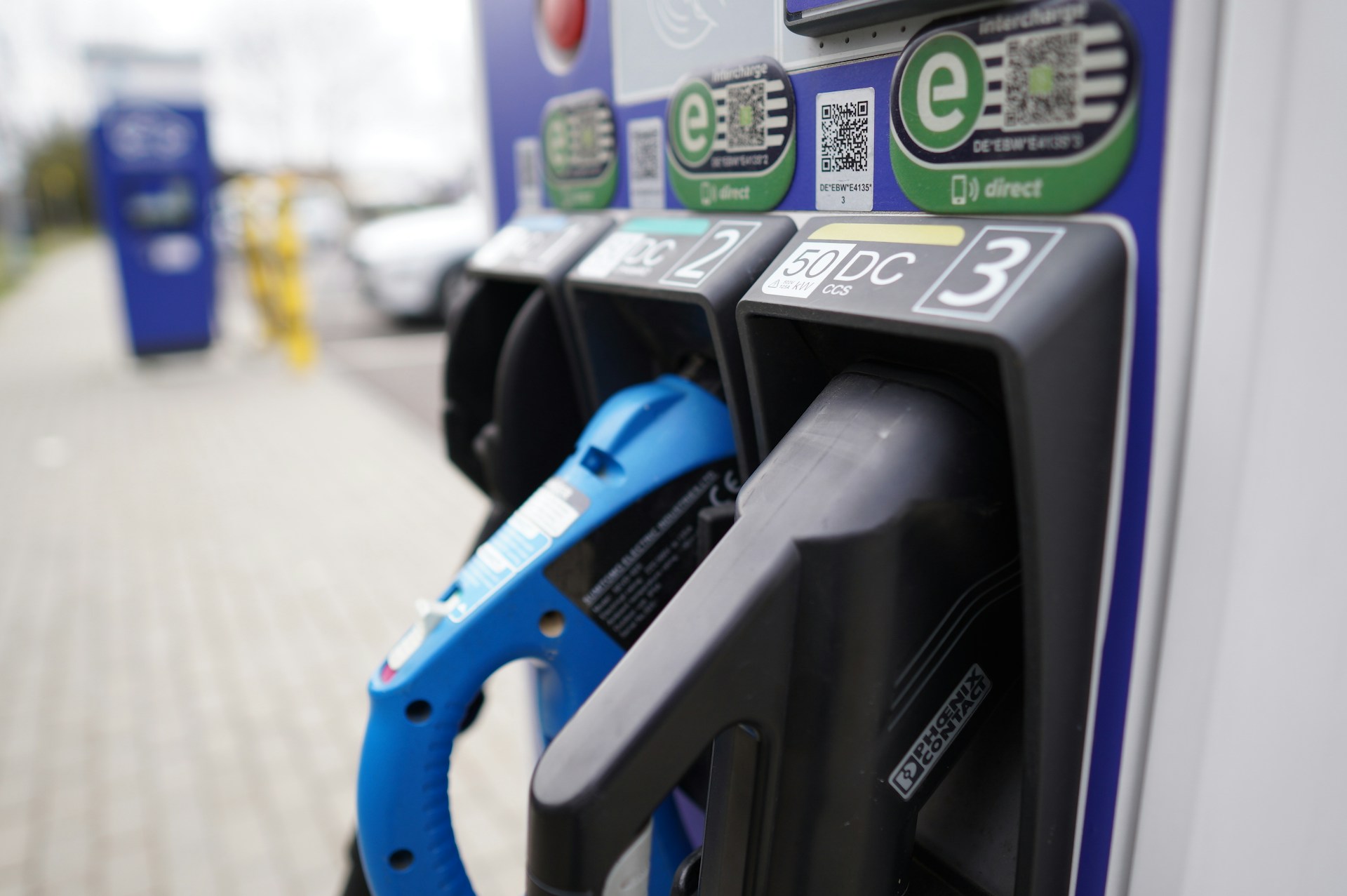
DC Fast Charging
These are the highway rest stop chargers for long trips:
- Cost: $0.30-$0.50/kWh
- Speed: 100-200+ miles in 20-30 minutes
- Networks: Tesla Supercharger, Electrify America, EVgo
A fast charge from 20% to 80% on a 75 kWh battery costs approximately $15-25. That’s more expensive than home charging but still competitive with gas.
The Gas Station Comparison
Let’s compare apples to apples. For a car that gets 30 MPG with gas at $3.50/gallon:
| Distance | Gas Cost (30 MPG) | EV Home Cost | EV Fast Charge |
|---|---|---|---|
| 100 miles | $11.67 | $3.00-$4.00 | $7.50-$12.50 |
| 250 miles | $29.17 | $7.50-$10.00 | $18.75-$31.25 |
| 12,000/year | $1,400 | $360-$480 | $900-$1,500 |
The bottom line: Home charging costs 60-75% less than gas. Even expensive DC fast charging typically beats or matches gas prices.
Time-of-Use Rates: The Secret Weapon
Many utilities offer time-of-use (TOU) rates that can slash your charging costs even further:
- Off-peak hours (typically 9 PM - 6 AM): $0.06-$0.10/kWh
- Peak hours (4 PM - 9 PM): $0.20-$0.40/kWh
By charging during off-peak hours—which most EV owners do anyway while sleeping—you can reduce costs by 30-50% compared to standard rates.
Pro tip: Most EVs let you schedule charging to start automatically during off-peak hours. Set it once and forget it.
Understanding MPGe: The Efficiency Metric
The EPA uses MPGe (miles per gallon equivalent) to compare EV efficiency to gas vehicles. The calculation assumes 33.7 kWh equals one gallon of gasoline’s energy content.
A typical EV rated at 100 MPGe means it travels 100 miles on 33.7 kWh of electricity. At $0.12/kWh, that’s $4.04 per 100 miles—compared to $11.67 for a 30 MPG gas car.
Real-World Cost Examples
Example 1: Daily Commuter
- Vehicle: Tesla Model 3 (efficiency: 3.5 mi/kWh)
- Daily commute: 40 miles round trip
- Home charging at $0.12/kWh
Daily cost: 40 miles / 3.5 mi/kWh x $0.12 = $1.37/day or $500/year
Equivalent gas cost (30 MPG at $3.50): $1,700/year
Annual savings: $1,200
Example 2: Road Trip Scenario
- Trip distance: 500 miles
- Mix: 80% home charging, 20% DC fast charging
- Home rate: $0.12/kWh, DC fast: $0.40/kWh
Total cost: (400 mi x $0.034) + (100 mi x $0.11) = $24.60
Equivalent gas cost (30 MPG at $3.50): $58.33
Trip savings: $33.73
Factors That Affect Your Costs
Several variables impact your real-world charging costs:
- Local electricity rates: Range from $0.08/kWh (Louisiana) to $0.30/kWh (California)
- Vehicle efficiency: Ranges from 2.5 to 4.5 miles per kWh
- Climate: Cold weather can reduce efficiency by 20-40%
- Driving style: Highway speeds and aggressive acceleration reduce range
- Charging habits: Home vs. public charging mix
The Verdict
For most drivers, switching to an EV means significant fuel savings:
- Home charging saves 60-75% compared to gas
- Time-of-use rates can push savings even higher
- Public fast charging is more expensive but still competitive
- Annual savings of $800-$1,500 are typical
The upfront cost of an EV may be higher, but the fuel savings add up quickly. Over a typical 10-year ownership period, you could save $8,000-$15,000 on fuel alone.
Ready to see what you’d save? Run your specific numbers through our calculator to get a personalized breakdown of your potential EV charging costs and savings.