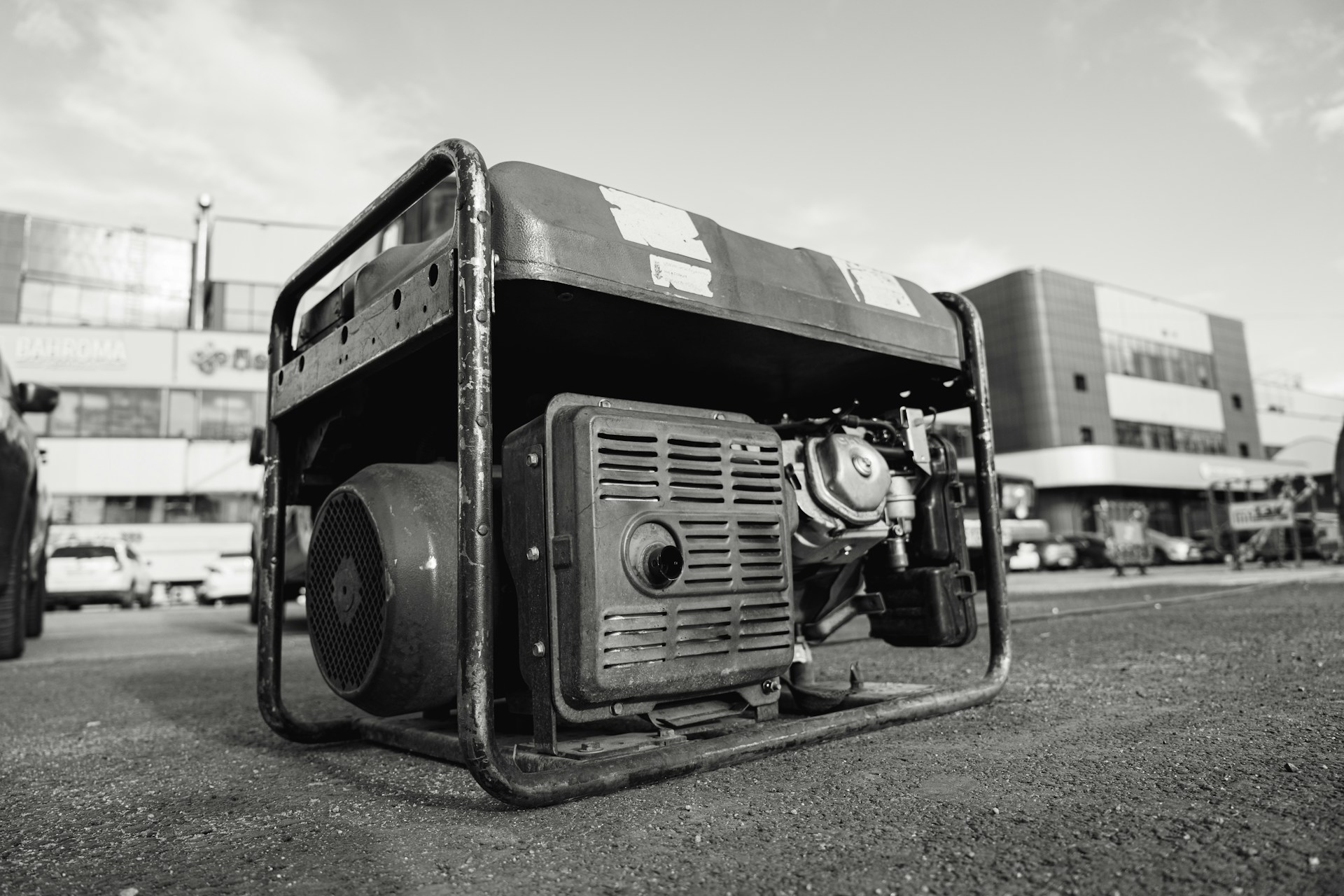
Power outages are unpredictable, but your backup power plan does not have to be. Whether you are preparing for storm season, protecting a home office, or ensuring medical equipment stays running, choosing the right generator size is critical. Too small, and your generator will overload. Too large, and you waste money on capacity you will never use.
This guide walks you through the exact calculations to size your generator correctly.
Understanding Running Watts vs Starting Watts
Before adding up your appliances, you need to understand the two types of wattage that matter for generator sizing.
Running watts (also called rated watts) represent the continuous power an appliance needs to operate. This is what you see on most product labels and what the device consumes during normal operation.
Starting watts (also called surge watts or peak watts) represent the extra burst of power needed when an appliance first turns on. Motor-driven appliances like refrigerators, air conditioners, and sump pumps require 2 to 3 times their running wattage for the first few seconds of operation.
For example, a refrigerator that runs on 200 watts might need 600 watts to start its compressor. If your generator cannot supply that startup surge, the refrigerator will not turn on, even if the generator handles the running load fine.
The rule: Your generator must handle both the total running watts of everything operating simultaneously AND the highest starting watts of any single appliance.
Common Appliance Wattages
Here are typical wattages for household appliances. Check your specific appliance labels for exact figures:
| Appliance | Running Watts | Starting Watts |
|---|---|---|
| Refrigerator | 150-400 | 400-1200 |
| Freezer | 100-400 | 300-1000 |
| Sump Pump (1/2 HP) | 800 | 1300-2150 |
| Window AC (10,000 BTU) | 1200 | 3600 |
| Central AC (3 ton) | 3500 | 4500-6000 |
| Furnace Blower | 500-700 | 1400-2350 |
| Well Pump (1/2 HP) | 1000 | 2100 |
| Microwave (1000W) | 1000 | 1000 |
| Electric Water Heater | 4000-4500 | 4000-4500 |
| Television | 100-400 | 100-400 |
| Laptop | 50-100 | 50-100 |
| LED Lights (per bulb) | 10-15 | 10-15 |
| Garage Door Opener | 500-725 | 1400-2200 |
| Coffee Maker | 800-1200 | 800-1200 |
| Phone Charger | 5-25 | 5-25 |
Notice that resistive loads like heaters, lights, and coffee makers have identical running and starting watts. Only motor-driven appliances have significant surge requirements.
How to Calculate Your Total Load
Follow these steps to determine your generator size:
Step 1: List essential appliances
Decide what you absolutely need during an outage. Prioritize life safety items first:
- Medical equipment
- Sump pump (if your basement floods)
- Refrigerator and freezer
- Heating system (furnace blower or space heater)
- Lighting
- Communication devices
Step 2: Add up running watts
Total the running wattage of everything you want to power simultaneously. Using the table above as a guide:
| Item | Running Watts |
|---|---|
| Refrigerator | 200 |
| Freezer | 150 |
| Furnace blower | 600 |
| Sump pump | 800 |
| 5 LED lights | 60 |
| TV | 200 |
| Phone chargers | 25 |
| Total Running | 2,035 |
Step 3: Identify highest starting watts
Find the appliance with the largest starting surge. In this example, the sump pump at 2,150 starting watts is the highest.
Step 4: Calculate minimum generator size
Add your total running watts to your highest single starting wattage, then subtract that appliance’s running watts:
Minimum = Total Running + (Highest Starting - That Appliance’s Running)
Using our example: 2,035 + (2,150 - 800) = 3,385 watts minimum
Size Your Generator
Add your loads and get the right generator size instantly.
Calculate Generator SizeAdd a 20% Safety Margin
Never run a generator at 100% capacity. Operating at full load causes excessive wear, reduces fuel efficiency, and shortens generator life. Most manufacturers recommend staying below 80% of rated capacity for continuous operation.
Recommended size = Minimum watts x 1.2
From our example: 3,385 x 1.2 = 4,062 watts
Round up to the nearest available generator size. A 4,500-watt or 5,000-watt generator would be appropriate for this load.
The Staggered Starting Strategy
If your calculated size seems too large or expensive, staggered starting lets you use a smaller generator safely. Instead of turning everything on at once, you start appliances one at a time, waiting 10-15 seconds between each.
This works because:
- Each appliance only needs its starting surge for a few seconds
- Once running, appliances drop to their lower continuous wattage
- You never hit multiple surges simultaneously
Example: With a 3,500-watt generator, start the sump pump first (needs 2,150 watts to start, then drops to 800). Wait 15 seconds. Start the refrigerator (needs 600 starting watts on top of the 800 already running = 1,400 total, well under capacity). Continue adding loads gradually.
Staggered starting requires manual discipline but can save hundreds of dollars on generator size.
Portable vs Standby Generators
Portable Generators
Best for: Occasional outages, budget-conscious homeowners, renters
Typical sizes: 2,000-12,000 watts
Pros:
- Lower upfront cost ($300-$2,000)
- No installation required
- Can be used for camping, job sites, or tailgating
- Easy to store
Cons:
- Manual setup during each outage
- Requires outdoor placement and extension cords
- Must be refueled every 8-12 hours
- Louder operation
- Cannot power hardwired systems without a transfer switch
Standby Generators
Best for: Frequent outages, medical needs, home-based businesses, whole-house backup
Typical sizes: 7,000-22,000+ watts
Pros:
- Automatic startup within seconds of outage
- Powers your entire electrical panel
- Runs on natural gas or propane (no refueling)
- Quieter operation
- Higher resale value for your home
Cons:
- Higher cost ($3,000-$15,000+ including installation)
- Requires professional installation and permits
- Permanent placement in yard
- Regular maintenance required
Quick Sizing Guidelines
If you want a rough estimate without detailed calculations:
| Backup Goal | Recommended Size |
|---|---|
| Essentials only (fridge, lights, phones) | 2,000-3,500 watts |
| Essentials + furnace or window AC | 3,500-5,000 watts |
| Essentials + well pump + multiple circuits | 5,000-7,500 watts |
| Whole-house with central AC | 10,000-20,000 watts |
These are starting points. Your specific appliances and usage will determine the exact requirement.
Final Recommendations
- Always check appliance labels for exact wattage rather than relying on estimates
- Include the 20% safety margin to extend generator life and ensure reliable operation
- Practice staggered starting if using a portable generator near its capacity
- Consider future needs such as EV charging, home additions, or new appliances
- Have a transfer switch installed for safe connection to your home’s electrical panel
A properly sized generator gives you peace of mind during outages without wasting money on unnecessary capacity. Take the time to calculate your actual needs, and you will have reliable backup power for years to come.